|
Statement
I am a transdisciplinary sculptor contemplating the body and its relationship to structures of power. My research-based practice explores ecology, posthumanism, disability, and embodiment through a post-colonial lens. At its core, my practice asks if an institution has the power to disable a body, does the body have the power to disable an institution.
As Johanna Hedva explains, “The body's dependence is its ontology, it can not survive alone unto itself, even if it wanted to.” In this sense, institutional bodies are not independent from the mortal bodies that serve them. The body is never singular; it encompasses the human, the institutional, the architectural, and the ideological. My sculptures form an ecosystem where embodiment and their porousness reflects the fragility of organic bodies and the institutions and ideologies that permeate them.
Grappling with the identity of disability, I depict figures in various stages of decomposition and incompleteness. My work seeks to make visible the precarious materiality of the human body but also of institutional and ideological bodies to reveal their impermanence. I probe the illusion of immortality and the certainty of death, asserting that all bodies, whether organic or constructed, require maintenance to endure. The institutions that appear eternal are, in truth, as precarious as flesh. Through sculptural inquiry, I expose the vulnerability of these systems and ask viewers to see their impermanence as clearly as we see our own.
DISABILITY INFORMATION:
Arthritis, scoliosis, chronic pain syndrome (CPS), thoracic outlet syndrome (TOS), PTSD, and hypermobility which has led to multiple corrective orthopedic surgeries.
 |
 |
 |
 |
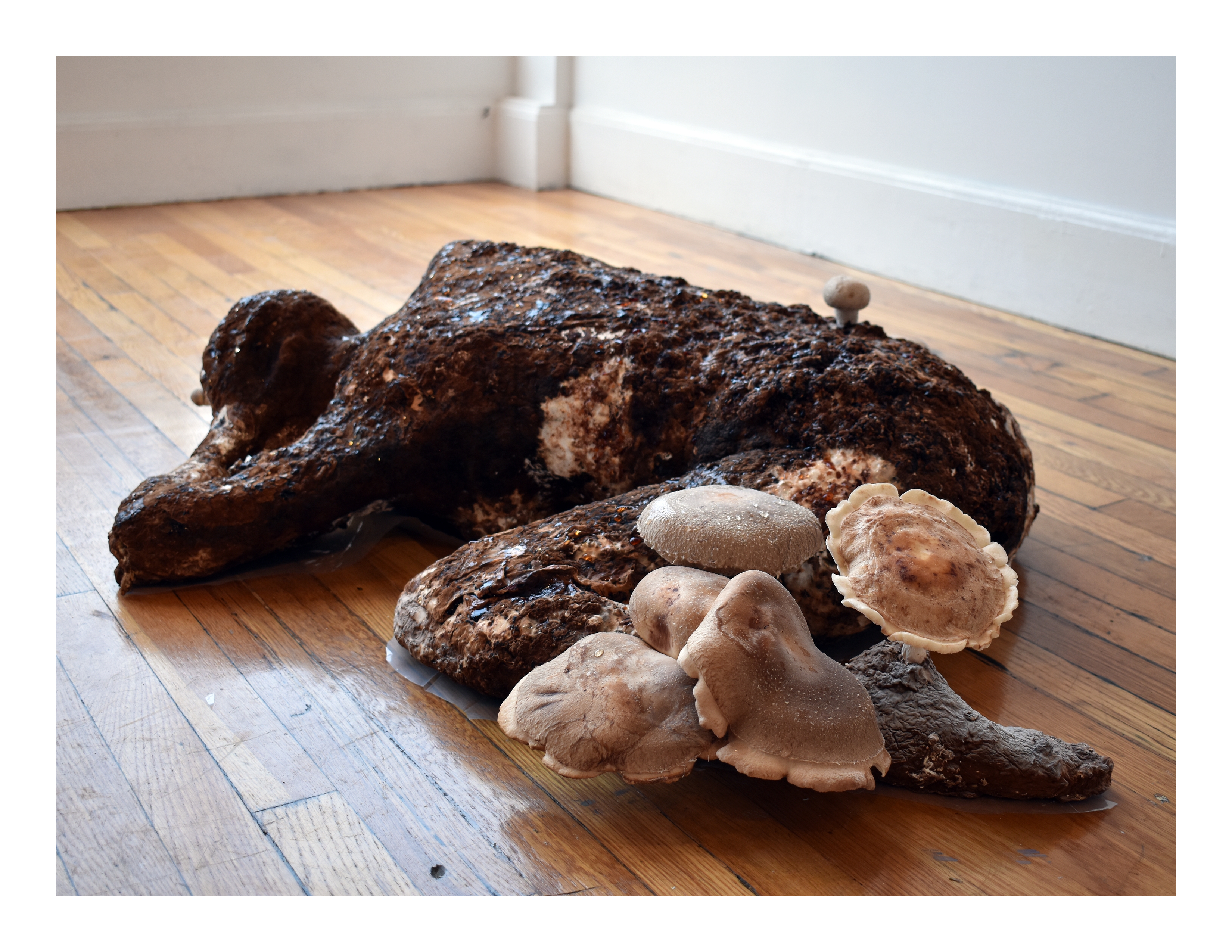
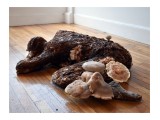
Fruitful Bodies: Oread
2021
Shiitake (Lentinula edodes)
14 x 46 x 38 inches
Oread is a human form that fails to escape her assailant. She collapses in situ and her flesh transmogrifies. Oread, goddess of the stone, is a sculpture made of living Shiitake mushrooms. This work is a part of a series called Fruitful Bodies that looks at the narrative function of feminizing nature. In myth, the only defense these demigods possess is to relinquish their ichor, the power of divinity that flows in their veins. Under duress, they metamorphose into a natural formation, a stream, a stone or a species of tree, to avoid predation. This process is permanent and their sacrifice extinguishes any agency they once possessed. Specifically, these transformed feminine bodies become resources for human consumption. The grotesque composition of their fruitful bodies offers an allegory for western civilization’s cultural domination over nature, to wit, the ubiquitous pattern of extractive policies towards nature through the commodification of women’s bodies.
|
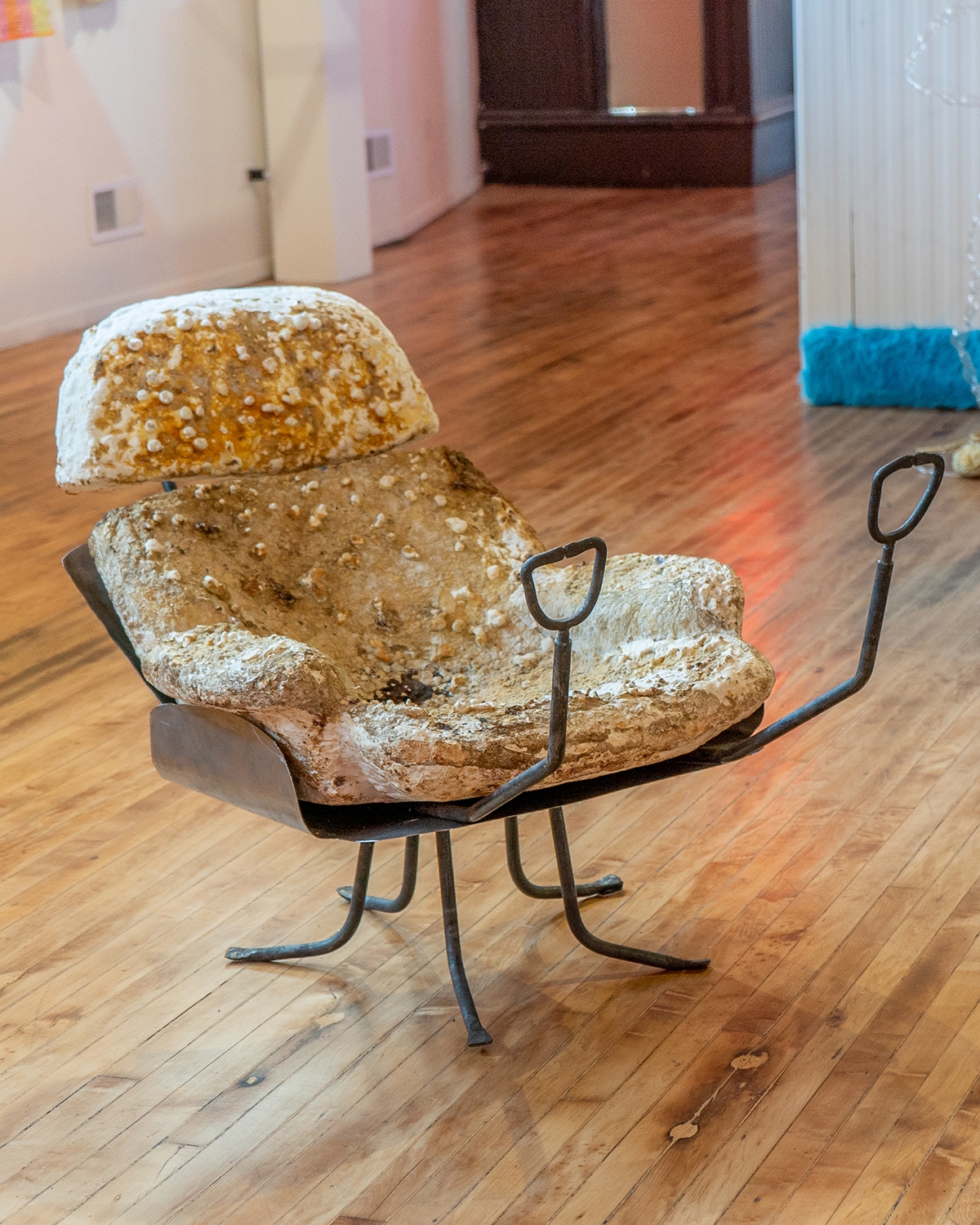
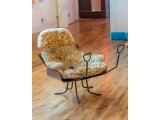
MCM OBGYN
2023
Mushroom, Steel
34 x 38 x 60 in.
This sculpture grown from mushrooms is modeled from the mid-century modern iconic Eames Chair. Rather than a foot ottoman the piece offers gynecological stirrups. This work is from a series of furniture designed for SPACORE, a curatorial platform for the lived experiences under wellness capitalism and situates wellness in the horror genre, where it belongs.
The mushroom, a chair and a body on display speaking to the objectification of the female body as ornamentation in Modern design. The metabolites leak from the body of the living mushroom and pool at the back of the chair discoloring the work with a ‘wet-spot’. The slimy liquid challenges the viewer to sit in the chair and become the ornament.
|
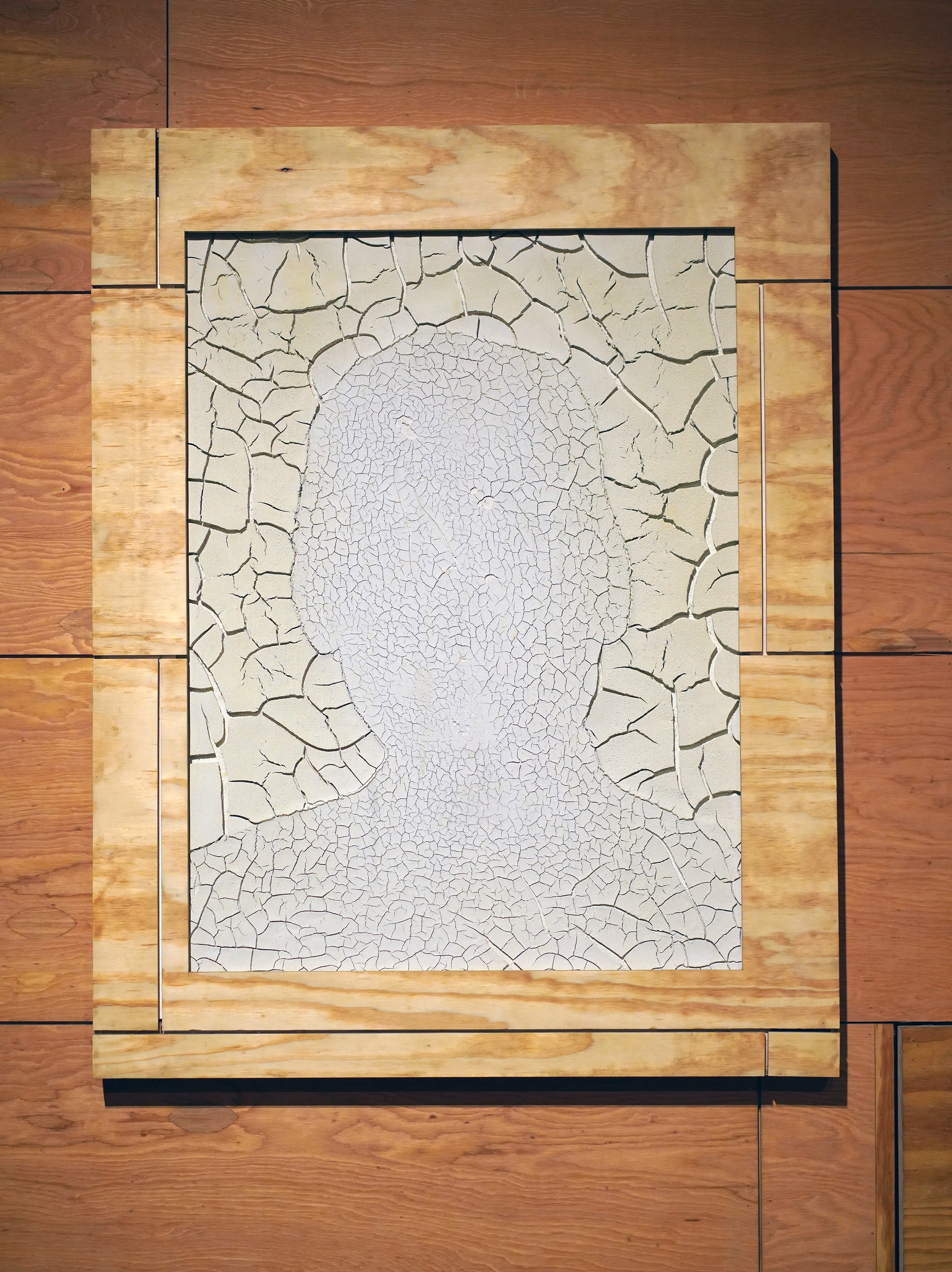
Hero In DryBone
2023
46 x 38 x 6 inches
Synthetic bone, plywood
36 x 48 x 6 in.
The body is portioned into two substances, flesh that rots, and bone that lingers. Bone becomes a metaphorical material for resting death in attempts for immortality. The portrait is an embodiment of a hero image. This work references Ernest Becker’s book Denial of Death where the Hero becomes a stand-in for symbolic immortality. This theory illustrates how implicit ideologies of power are embedded within the constructions of institutions. The portrait hangs surveillancing the exhibition space from a frame that appears embedded within the wall. The bone appears as if exposed from the facade of the institution. This work is part of a series of wall works including landscapes cast from the same synthetic bone material.
|
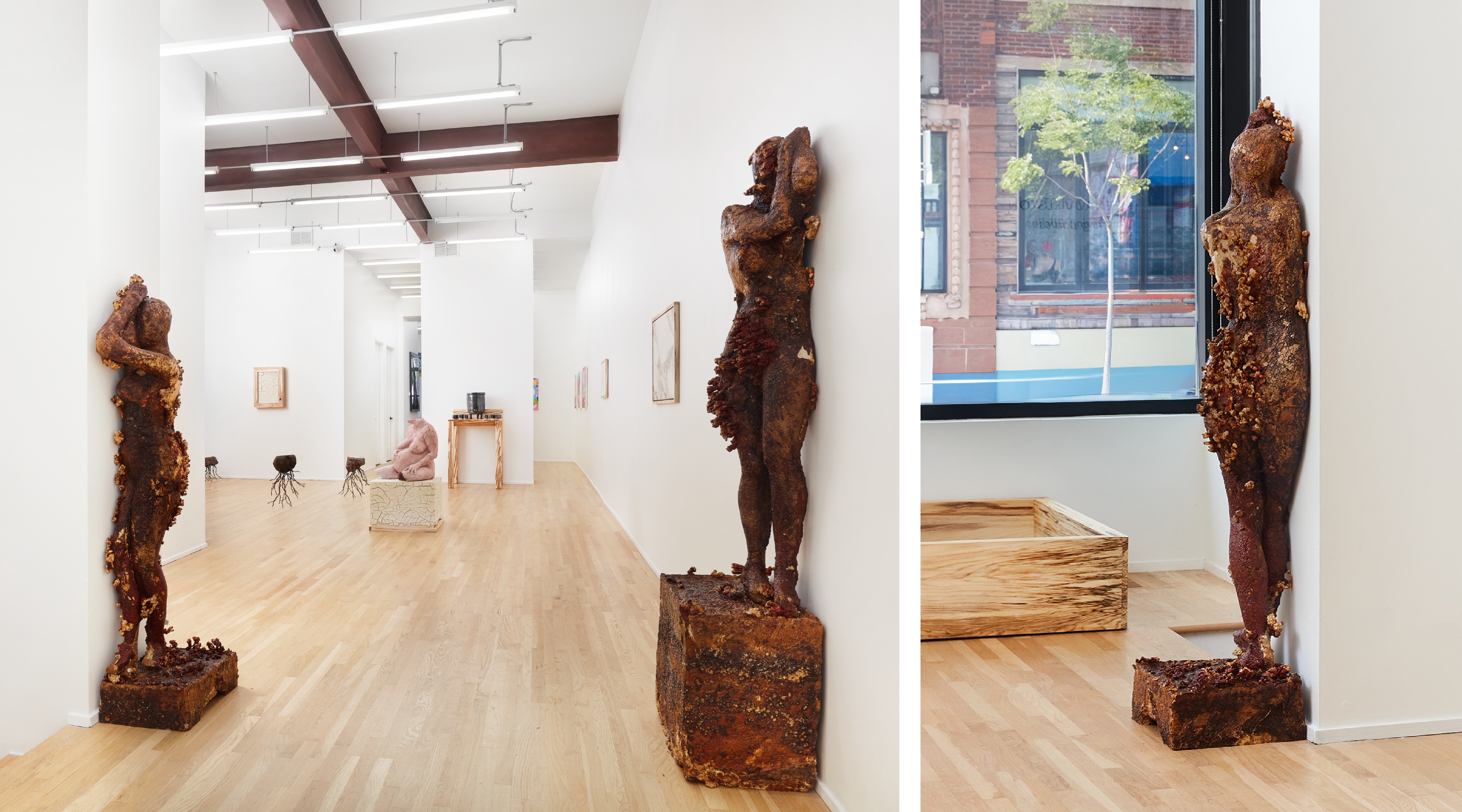
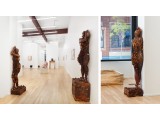
Caryatids
2025
Reishi (mushroom of immortality)
80 x 24 x 16 in.
These Caryatid sculptures are standing feminine bodies at rest grown from Reishi mushrooms then preserved. Caryatids are an architectural motif that originates in the ancient world and were named after the women of Carya that were enslaved by the Greeks. Their figures carved in stone adorn temples depicting them holding up the building with their bodies. The Caryatid are forever enslaved and exist as a warning of the fate of dissidents against an empire. Here their bodies are in states of both rest and involuntary, continual labor. Even in their dreams their bodies perform the function of holding up the structure around them.
|
 |
 |
 |
 |
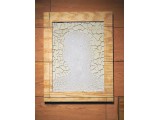
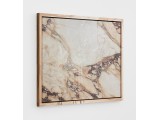
Blood Etching I
2025
Calacatta Viola marble, blood, spalted maple
24 x 36 in.
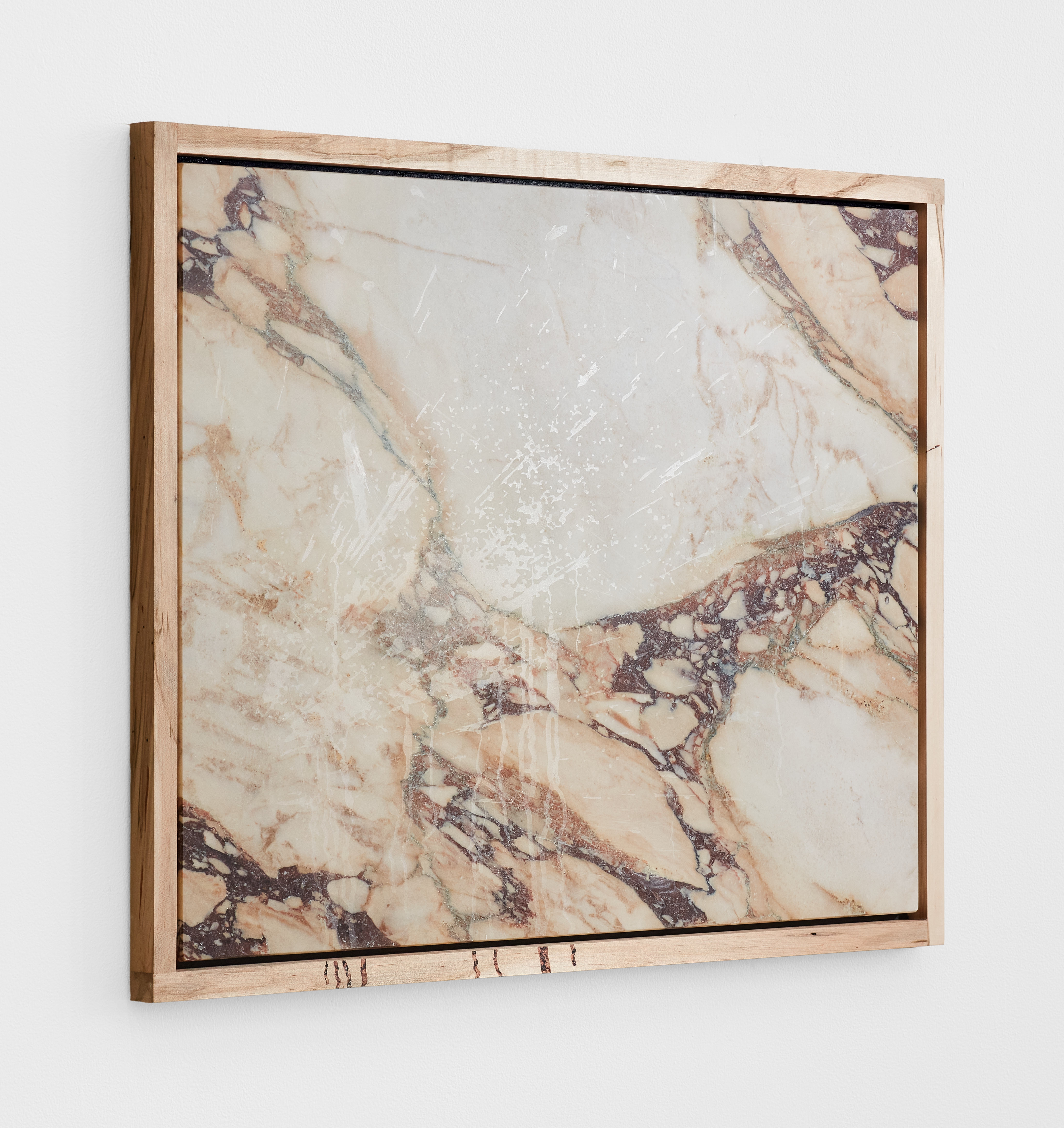
A veined marble is hung from the wall with a frame of spalted maple. Along the frame, blood spatter has soaked in, staining the work. The blood spray is etched onto the marble surface using industrial chemical products used to clean up crime scenes. Famous for its use in the Parthenon and works commissioned by the Medici family, this marble is ubiquitous in the architectural presentation of power and dominance.
|
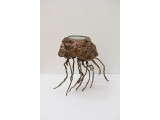
Chthonic Entities I
2025
Bronze, marble
14 x 13 x 10 in.
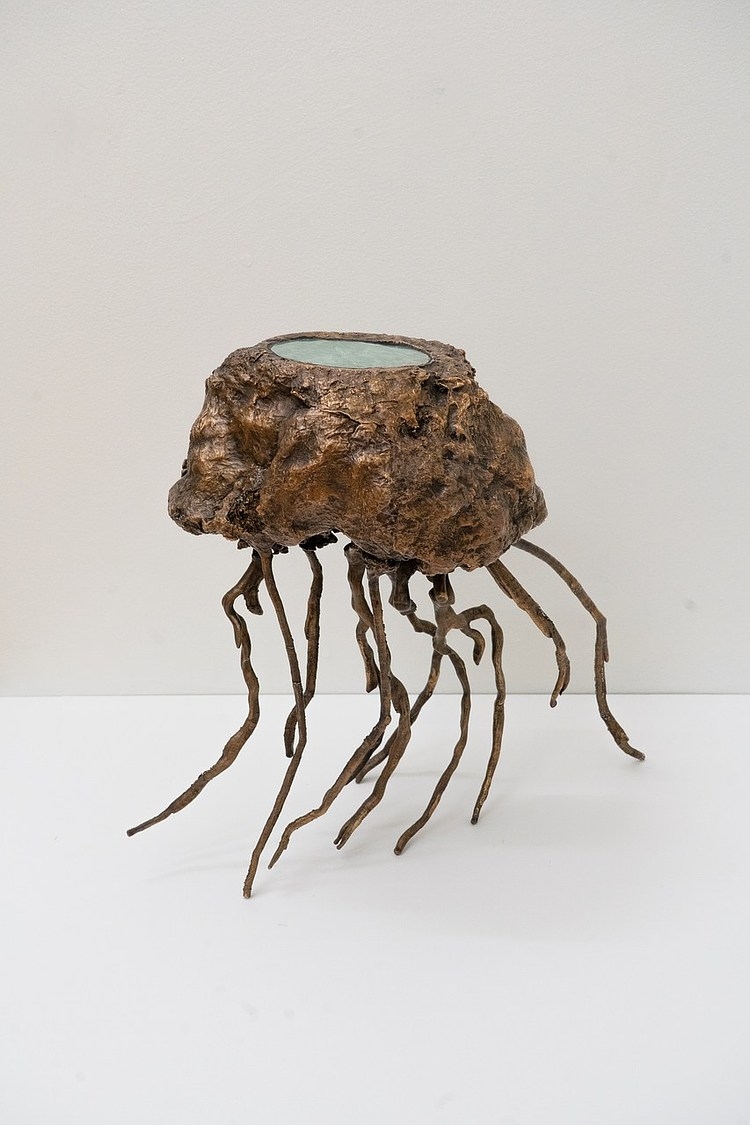
These chthonic sculptures are grown from reishi mushrooms and cast in bronze. They exist in a dance between ephemerality and permanence, an interplay between the biological and inanimate. The resulting structures become symbols of immortality, urging viewers to ponder questions of change that manifest on both a biological and political level.
|
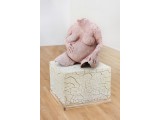
Forty Weeks
2025
bisqued ceramic, synthetic bone
32 x 32 x 40 in.
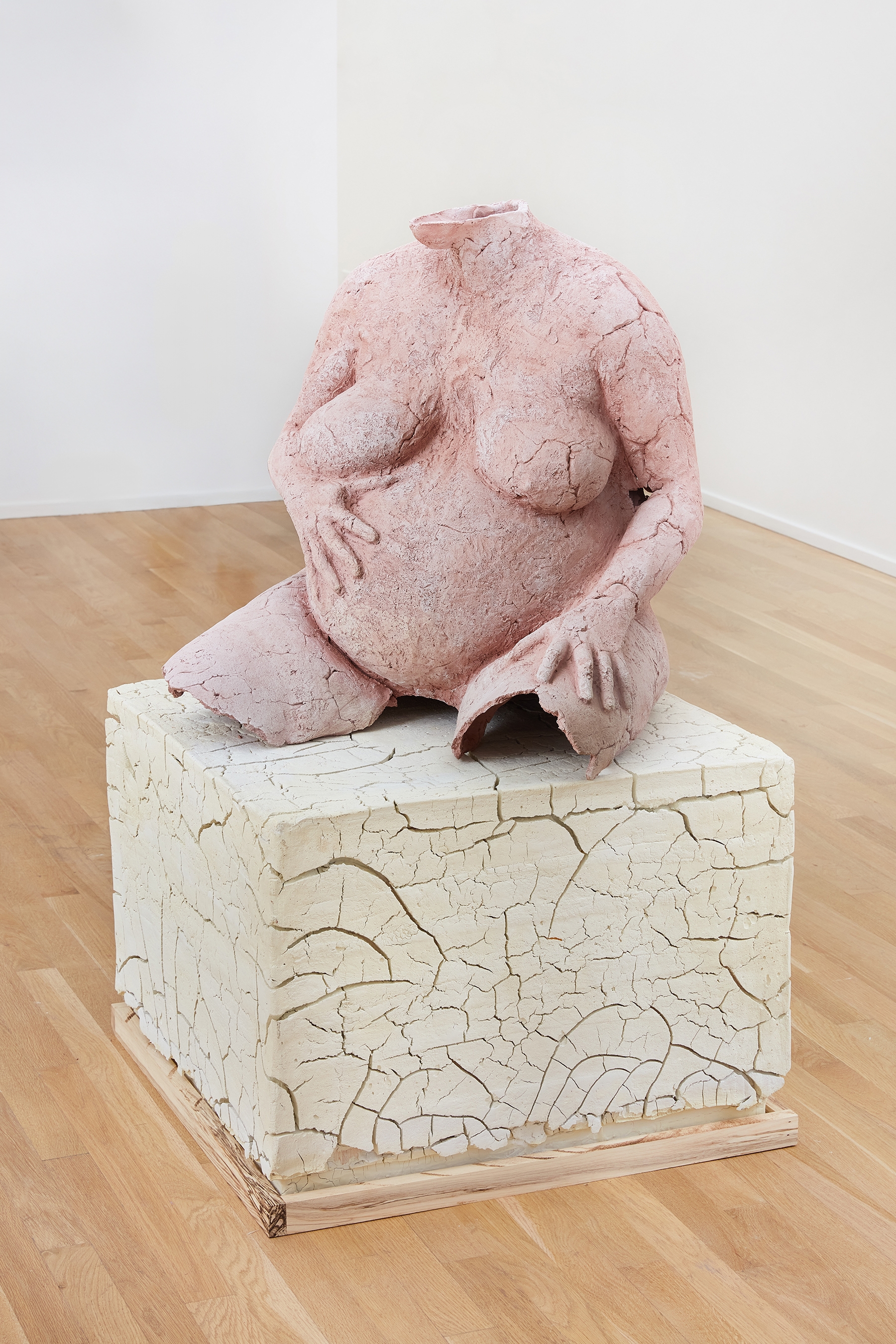
Here the pregnant body of the artist sits in anticipation on top of a pedestal of synthetic bone. The museological motif to hold a body for display invokes the institutional body as well as the human. The sculpture depicts a figure in a lingering state of anticipation. A body in transition as it creates a new body in an extreme state of precariousness. The ceramic is bisqued but not vitrified presenting a porous and fragile form.
|
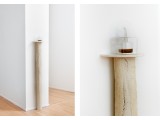
Strigil Oil
2025
olive oil, sweat, glass, marble, synthetic bone
6 x 6 x 40 in.
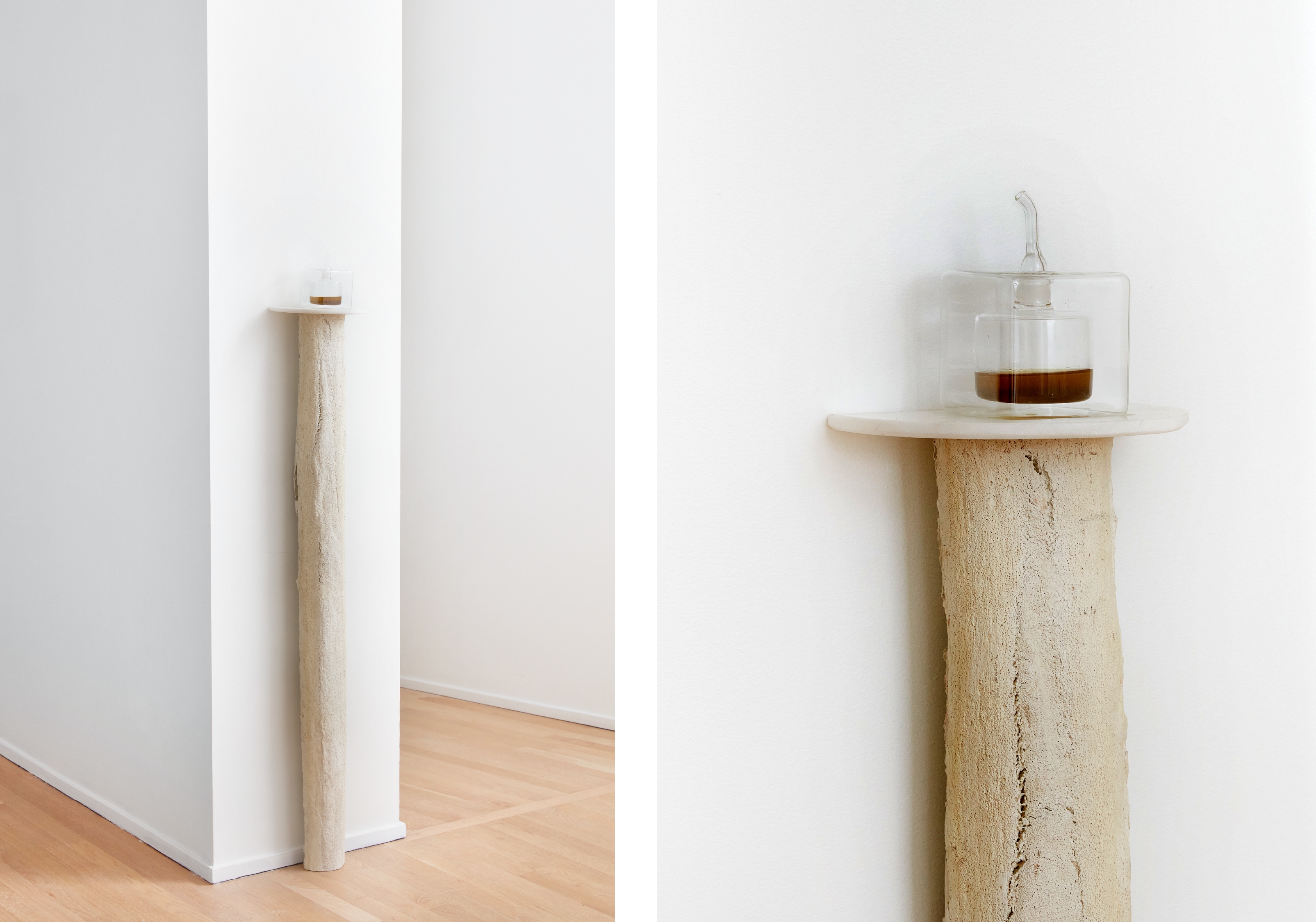
The vessel is a pheromonic time capsule of giving birth. Olive oil infused with the artist’s sweat collected from her body after a 73 hour duration of being in labor. The sweat is oil soluble with extremely high amounts of oxytocin and pheromones that are absorbed into the olive oil. The work is presented for the viewer to dab on their own skin like perfume. The porosity of skin allows the transfer and absorption of the suspended pheromones leading to many reported vivid dreams of pregnancy and giving birth.
|
|